
Digital nazar
What is an 'intimate image' in brown cultures and how is it weaponised against us?

This week, I hand you over to Hera Hussain. She is the founder of Chayn, a global non-profit that supports survivors of gender-based violence through multilingual resources on identifying abuse and healing from it.
I’ve been lucky to know Hera for over ten years and, in that time, not only have I witnessed her work make serious impact in public discourse and policy, I’ve got to watch her become a stronger and stronger leader — whilst being funny, not accepting bullshit, and having two kids in tow. I could write a whole piece on Hera, motherhood and work but now is not the time!
In the context of the discourse around Grok undressing women and children, Hera’s work is becoming more important than ever. As I always say, with Brown Bodies I’m learning alongside you, and I hand over to Hera with the hope that we all become part of the conversation as the digital landscape changes our lives, once again.
What intimate means in brown cultures and how images are weaponised against us
When I was 14, I was at a family wedding in Lahore, Pakistan. Everyone I knew on my mother’s side was there — a huge family. My grandmother was the eldest of ten siblings and each of them had at least two children, and some as many as five, so you do the math! In typical Big Asian Wedding fashion, the other side of the family also had their guests. There must have been two or three hundred people there. It was the Mehndi night — a cultural celebration with songs, dancing, colourful clothes and lots of food. I was talking to a cousin. He was four years older than me, lived in a different city to me and we had quite a few things in common. We were sitting on stage and must have been talking for about five minutes when my mother walked quickly towards me with a stern look. When my cousin met her eyes, she softened hers and told him to go find some person who was apparently looking for him. To me, disappointed and worried she said, ‘What are you doing sitting with him alone and so close?’ In my innocence, I couldn’t fathom how sitting in a crowd of three hundred people could count as being alone. Plus, I wasn’t sitting that close to him, anyway. When I protested, she said, ‘You don’t know with what eyes…kis nazar se… people look at these things. I saw two people take a picture of you.’
A fully clothed young girl sitting next to her cousin at a wedding would not raise an eyebrow in many parts of the world — like in the UK, where I live now — let alone lead to a photo being taken maliciously. Over the course of my time in Pakistan, before I came to study in Glasgow in 2008, I experienced many things like this, as did people around me:
I heard of a guy showing off an intimate video of himself making out with his girlfriend to a group of male friends at school — she also went to the same school and came from an economically disadvantaged background. My (male) friend pulled him up on it. It was damaging for her. It also turned out he’d promised to marry her with no real intent.
Another example is I would notice how aunts who covered their heads outside of the house would grab their dupatta at home if anyone was taking a picture — they knew it could be shared and they wanted to make sure they weren’t seen without it.
To torment women, there were real threats made of leaking images to brothers and fathers. And the images in question were often as innocent as sitting on one’s bed in night clothes; laughing in a mixed-sex gathering; being out with friends at night; or a cute mirror-selfie… as if all selfies are taken with men in mind.
We’d see models and actors being slut-shamed for wearing western clothes — because that equated to loose morals, somehow — or even wearing our own ethnic wear that showed off arms. How a few inches of bare skin or head held the power to besmirch the honour of an entire family or nation is beyond me. But it did, and does.
‘Log kya kahain gay’ — what will people say — which was once reserved for in person shame, crossed over to long last digital shame with the advent of phones and social media, with such ease and agility.
And it wasn’t just in Pakistan that women were being punished. When I was studying in Glasgow, I heard stories of girls on campus being photographed without their consent during nights out and while they were passed out — naked or in barely any clothes. These images would then be shared as a ‘joke’, and then be brought up whenever the girls’ names came up. As women, we were expected to be okay with it because ‘boys will be boys’ and, anyway, we were the ones who had ‘put ourselves in a compromising position.’
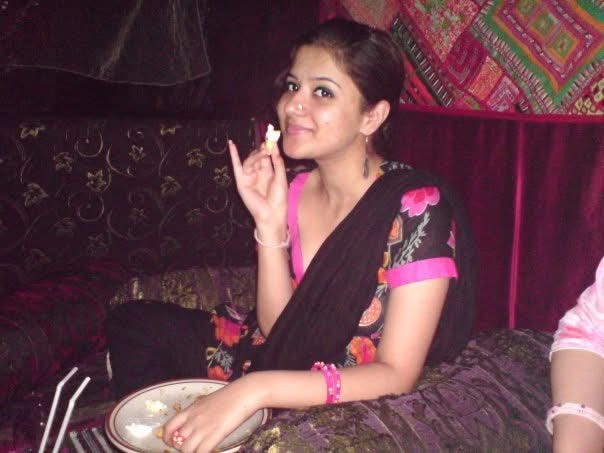
Little did I know that all of these experiences would one day be such a driving force for how I advocate against technology-facilitated violence: the way we talk about it needs to be culturally-aware.
Since I founded Chayn (which means solace in Urdu) in 2013, I’ve been speaking up about re-centring the conversation around image-based abuse — it shouldn’t be about ‘how nude the picture is’, but about whether it is non-consensual and the cultural context in which that fact exists. Nude images can be devastating and damaging but so can fully clothed ones if you’re defying some notional societal boundary — they can have just as severe consequences for survivors and their families.
Right now, everyone is talking about Grok, X’s AI chatbot, and its capabilities to undress people and create deepfakes. In the last few weeks we’ve seen, primarily male users, use it to abuse women and children by getting the AI to undress them and create sexualised images. We would not allow men to disrobe women or children walking down the street, so why are we allowing it online? I can’t forget how a radio caller to a programme I was on, on BBC 5 Live, said that the reason there is such an uproar about Grok is because it’s caused people ‘embarrassment’ and ‘it’s just bikini pictures.’
The uproar is changing things but it needs to go further. Most laws in the West, including in the UK, recognise image-based abuse in law only when the image is nude, semi-nude or sexual in nature. This has to change. The conversation has to be about consent, bodily autonomy, and the harms that are experienced by the survivors — not just our perception of them.
What we’re doing and how you can support
Chayn is building a global map of what ‘intimate’ means around the world in the context of creating a culturally-aware understanding of image-based abuse. We’ve started with Pakistan and the diaspora. We’ve conducted 60+ interviews with survivors and experts. We’re hearing stories from survivors about how they have faced blackmailing and abuse for images: without a hijab; dancing at a wedding; of clothes that became ‘inappropriate’ and clung to their bodies when they got wet; in Western clothes; in gym attire... And about the consequences they’ve experienced like physical assault, losing a job, being forcibly married, taken out of education, taunted, publicly shamed, and more. We’ve heard stories of survivors being left feeling suicidal, helpless, angry, shame and grief.
Given the interest in this work, we’re now expanding the research to anyone who identifies as having South Asian heritage — whether you live in the region or are part of the wider diaspora. Please share this link out with your network and get in touch if you would like to partner in this work.
This richness of contextual experience and the gravity of the consequences have been missing from the global conversation. We want what is understood in our cultures to be recognised in law. And —for those who do not understand — we want them to see, hear, bear witness and join the fight to uproot rape culture from our homes, streets, schools, universities, workplaces, markets, law and online.
If you’ve experienced image-based abuse, please visit Chayn’s Bloom’s free and online course on healing from this trauma: bloom.chayn.co. It’s been cocreated by survivors and you can go through it at your own pace.
A huge thank you to Hera for her words. I’d love to hear your thoughts in the comments or in reply to this email.